

Question: Can I write off a boat or yacht I bought through my business?
Buying a Boat Through Your Business: Why the IRS Blocks Most Yacht Write-Offs
The IRS lists a yacht as an entertainment facility, and generally no expense for its use, including depreciation and operating costs, is deductible. Here is where the rule bites, what listed property means for a boat, and when a business really can depreciate one.
Small Business14 min read
 By Joanny Ibarbia, EA · CAA
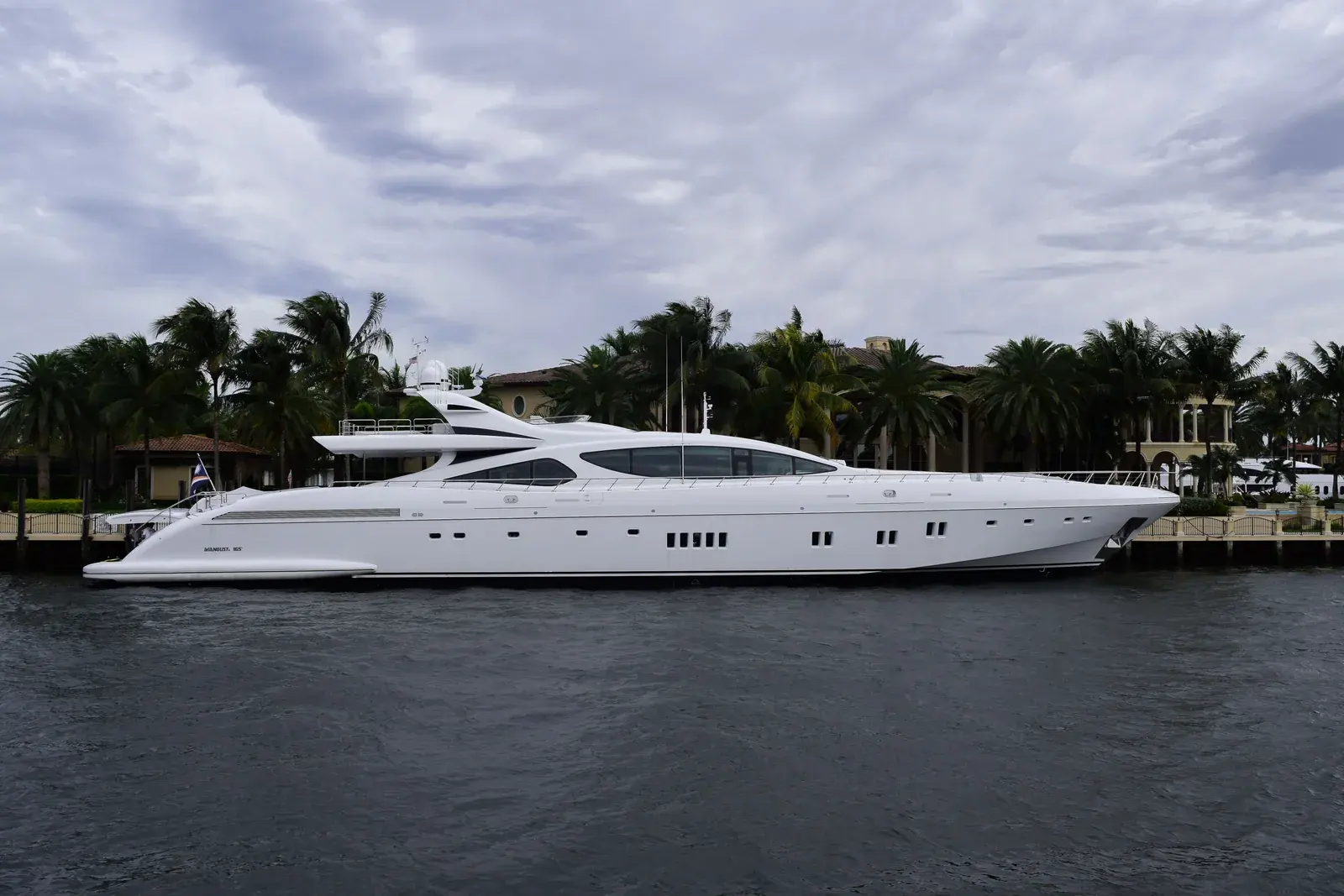
Quick answer
The IRS treats a yacht as an entertainment facility, and it says plainly that generally you cannot deduct any expense for the use of an entertainment facility, including depreciation and operating costs. That is the default answer for a boat bought to entertain clients. A boat used substantively in a charter, fishing guide, or transportation trade escapes the entertainment rule and becomes listed property, depreciable only if you can prove more than 50% qualified business use with adequate records.
Key points
- The IRS lists a yacht as an example of an entertainment facility, and generally no expense for its use, including depreciation and operating costs, is deductible
- Entertainment expenses paid or incurred after December 2017 are generally nondeductible, so a boat used to entertain clients is not saved by a business purpose label
- A boat used substantively in a trade or business, like a charter operation or a fishing guide service, is listed property, depreciable only when more than 50% of use is qualified business use, with contemporaneous records
- Vessels are 10-year property for MACRS, and 100% bonus depreciation is available for qualified property acquired and placed in service after January 19, 2025, only when the property clears the listed property tests
- Without adequate records the IRS can disallow every dollar of depreciation and Section 179 the business claimed on the boat, whatever the marketing story
What tax law calls a boat used to entertain clients
The IRS entertainment guidance puts a yacht in a specific category and treats every category member the same. The rule reads: "Entertainment facilities. Generally, you can't deduct any expense for the use of an entertainment facility. This includes expenses for depreciation and operating costs such as rent, utilities, maintenance, and protection. An entertainment facility is any property you own, rent, or use for entertainment. Examples include a yacht, hunting lodge, fishing camp, swimming pool, tennis court, bowling alley, car, airplane, apartment, hotel suite, or home in a vacation resort."[2]
The reach of the rule is what people miss. It is not limited to boat trips. Depreciation, fuel, dockage, insurance, cleaning, maintenance, and captain wages that trace to entertainment use of the yacht all sit inside the same deny-all category.[2] A South Florida owner who buys a boat inside an LLC to host clients has not created a deductible expense, and the LLC wrapper does nothing to change that outcome. For the small business side of the picture our small business accounting work is where these classification calls get made before the boat is ever bought.
Why the 2017 entertainment change matters here
Two rules stack for a boat used to host clients, and both cut the same way. The older rule denies deductions tied to an entertainment facility. The newer rule, effective for amounts paid or incurred after December 2017, denies deductions for entertainment expenses generally: "You can no longer take a deduction for any expense related to activities generally considered entertainment, amusement, or recreation. You can continue to deduct 50% of the cost of business meals if you (or your employee) are present and the food or beverages aren't considered lavish or extravagant."[3]
A yacht outing sits inside the definition. The IRS entertainment guidance identifies yacht outings as an example of entertainment.[4] A separately stated meal on the boat may qualify for the 50% business meal rule when the standard tests are met, but the boat time around it does not.[3] The right frame for a business owner considering a yacht is that the default is no deduction, and the exceptions are narrow and evidenced rather than assumed.

When a boat becomes listed property instead of an entertainment facility
A different rule set applies when the boat is genuinely a business asset rather than a floating conference room. The IRS depreciation guidance defines listed property to include "cars, business aircraft, and other property used for transportation, property used for entertainment, and certain computers."[5] A vessel used to transport paying passengers, to carry commercial catch, to move cargo, or to run a chartered fishing operation lands in the transportation half of that definition, not the entertainment half.
The classification is what matters, and the classification is driven by what the boat actually does. A boat with paying passengers on a chartered trip, a fishing guide running clients up the coast, or a diving instructor taking a group to a reef, all point at a trade or business separate from the owner's entertainment. A boat that mostly sits at a private slip and occasionally hosts prospects does not. For the return that reflects either picture see our business tax return preparation page, and for the underlying documentation see small business accounting.
What the more than 50% qualified business use test does
Once a boat is listed property, the depreciation regime tightens. The listed property rule is direct: "Business-use requirement. If the property is not used predominantly (more than 50%) for qualified business use, you cannot claim the section 179 deduction or a special depreciation allowance. For business aircraft, there is also a 25% test that must be met. In addition, you must figure any depreciation deduction under MACRS using the straight line method over the ADS recovery period."[6]
Read the sentence twice, because it stacks three penalties on one failure. Falling below the 50% qualified business use line costs the immediate expensing of Section 179, costs the special depreciation allowance including the 100% bonus discussed later, and forces the remaining MACRS depreciation onto a slower straight line method over a longer ADS recovery period.[6] A boat bought in a strong revenue year to soak up income delivers the opposite outcome when the business use share cannot be established later.
Which uses of a boat count toward qualified business use?
This is the trap. Entertainment use of listed property is treated as business use only to the extent the expense itself is deductible: "Entertainment use. Treat the use of listed property for entertainment, recreation, or amusement purposes as a business use only to the extent you can deduct expenses (other than interest and property tax expenses) due to its use as an ordinary and necessary business expense."[9]
So the yacht outing that would have been counted as client entertaining does not count. Because the underlying entertainment expense is nondeductible, the corresponding hours on the water are not qualified business use for the 50% test either.[9] That is why so many plans built around a we-take-clients-out-on-the-boat theory collapse at audit: the very hours the owner logged as business are the hours the rule strips out first, and once they are removed the boat rarely clears the 50% line.
| How the boat is used | How the IRS classifies it | What the business can deduct |
|---|---|---|
| Owner takes clients or prospects out on the water | Entertainment facility use | Generally no deduction for depreciation or operating costs |
| Personal or family recreation | Personal use of listed property | Not qualified business use; counts against the 50% test |
| Charter to paying passengers, or fishing guide service to paying clients | Transportation trade or business, listed property | Depreciable if more than 50% qualified business use, with adequate records |
| Boat is charter listed but sits unused most of the year | Listed property below the 50% test | No Section 179, no special depreciation allowance, MACRS straight line over the ADS recovery period |

How vessels depreciate under MACRS, Section 179, and bonus
For a boat that does clear the qualified business use bar, the recovery is straightforward. The IRS depreciation class table places vessels in the 10 year class: "10-year property. Vessels, barges, tugs, and similar water transportation equipment."[10] That is the ordinary MACRS life.
The accelerated pieces sit on top. Section 179 lets a business elect to expense qualifying property up to a dollar cap: "For tax years beginning in 2025, the maximum section 179 expense deduction is $2,500,000."[12] The 2026 figure is higher: "beginning in 2026, the maximum section 179 expense deduction is $2,560,000. This limit is reduced by the amount by which the cost of section 179 property placed in service during the tax year exceeds $4,090,000."[11] On the bonus side, The IRS depreciation guidance restores full expensing for newer acquisitions: "100% special depreciation allowance for certain qualified property acquired and placed in service after January 19, 2025 (including long production period property and certain aircraft), and certain specified plants bearing fruits and nuts planted or grafted after January 19, 2025."[7] A working vessel that clears the listed property tests can, in principle, reach immediate expensing. See our the OBBB bonus depreciation and Section 179 changes guide for the underlying regime that governs both figures.
What records does the IRS require for a business boat?
Records are load bearing for listed property. The listed property rule is unambiguous: "You cannot take any depreciation or section 179 deduction for the use of listed property unless you can prove your business/investment use with adequate records or with sufficient evidence to support your own statements."[8]
Contemporaneous is doing all the work in that sentence. A boat log reconstructed after the notice arrives is exactly what the rule was written to reject. What the IRS wants across the year is a running record of who was on the boat, what the trip was for, how many hours it ran, what the fuel and slip costs were, and how each trip mapped to a paying customer or an internal business purpose. The professional services tax help side of our practice sees the reverse problem too, where a real business trip is not deducted because the logbook is missing.
What commonly goes wrong when a South Florida owner buys a boat
- A yacht is bought through an LLC to entertain clients, and depreciation is claimed on the return. The entertainment facility rule denies the deduction, and the interest, dockage, maintenance, and insurance ride along with it.[2]
- Hours spent entertaining clients on the water are logged as business use, pushing the boat above the 50% line on paper. On audit, entertainment hours are stripped from the qualified business use count, the boat drops below 50%, and Section 179, bonus depreciation, and MACRS acceleration all fall.[6][9]
- The boat is placed in service on a marketing plan alone, with no separate trade or business behind it. The plan has no revenue, no charter contracts, and no customer records, so the boat is not listed property in a trade or business, and depreciation goes to zero.[5]
- A charter LLC is set up with real bookings, but no contemporaneous log is kept and the operating expenses live in the same account as the owner's personal card. Adequate records cannot be produced later, and every dollar of depreciation and Section 179 is at risk.[8]
- Bonus depreciation is claimed on a vessel acquired before January 19, 2025 under the assumption that 100% is available. The 100% special allowance is tied to property acquired and placed in service after that date, so the transition rules apply and the deduction is lower than the plan assumed.[7]
What should a Miami owner have in hand before writing the check?
The right question is not whether the boat can be depreciated, but which side of the entertainment line the boat will actually sit on for the whole year A boat with a paying trade behind it, contemporaneous records, and enough revenue to hold the more than 50% qualified business use share is a genuine listed property asset and is depreciable within the ordinary rules.[5][6] A boat bought as a client entertainment vehicle is not, and no LLC name, no marketing story, and no year end tax move changes that.[2]
A firm's job on a decision like this is to run the numbers both ways before the boat is bought, to name the substance the trade or business needs to have, to shape the logbook and books that survive a listed property audit, and to say plainly when the plan does not work. That is the kind of decision our advisory solutions handle, and it lives inside the broader professional services tax help context that pushes many owners toward this question in the first place.

Frequently asked questions
Can I write off a boat as a business expense if I use it to entertain clients?
Generally no. The IRS lists a yacht as an example of an entertainment facility, and its rule for that category is that you cannot deduct any expense for the use of an entertainment facility, including depreciation and operating costs such as rent, utilities, maintenance, and protection. The entertainment expense rule that took effect for amounts paid or incurred after December 2017 blocks the same claim from a different angle.
Is a yacht an entertainment facility for tax purposes?
Yes. The IRS entertainment guidance defines an entertainment facility as any property you own, rent, or use for entertainment, and lists a yacht among the examples, alongside common examples such as a hunting lodge, a fishing camp, a swimming pool, or a vacation-resort home. That categorization is what triggers the deny-all rule for depreciation and operating costs.
What if my LLC is set up as a charter or fishing guide business rather than for client entertaining?
That is the setup that moves a boat out of the entertainment facility category and into listed property in a trade or business. The IRS allows depreciation and Section 179 for listed property only when the property is used predominantly, meaning more than 50%, for qualified business use. Falling below the line costs Section 179 and the special depreciation allowance, and forces the remainder onto MACRS straight line over the ADS recovery period.
Do hours spent entertaining clients on the boat count toward the 50% business use test?
No. The IRS depreciation guidance says the use of listed property for entertainment, recreation, or amusement counts as business use only to the extent that the underlying expense would be deductible as an ordinary and necessary business expense. Because entertainment expenses are generally nondeductible after December 2017, those hours drop out of the qualified business use count, and a boat that looked over the 50% line usually falls back below it.
Does 100% bonus depreciation apply to a business boat?
It can, when the boat is listed property in a trade or business and the property was acquired and placed in service after January 19, 2025. The IRS depreciation guidance restored the 100% special depreciation allowance for qualified property that meets that acquisition and placed-in-service date rule. A vessel that fails the more than 50% qualified business use test does not qualify, because the special depreciation allowance is one of the deductions the listed property rule strips out when the test is missed.
What records does the IRS want the business to keep for a boat?
Contemporaneous records. The listed property rule states that a business cannot take any depreciation or Section 179 deduction for listed property unless it can prove the business or investment use with adequate records or with sufficient evidence to support its own statements. A running trip log with names, purpose, hours, fuel, and dockage costs, matched to invoices or customer bookings, is the shape that survives.
How is a boat depreciated when it does qualify?
As 10-year property under MACRS. The IRS depreciation class list places vessels, barges, tugs, and similar water transportation equipment in the 10-year property class. Section 179 and, for property acquired and placed in service after January 19, 2025, the 100% special depreciation allowance sit on top of that ordinary 10-year recovery for qualifying listed property, subject to the 2025 $2,500,000 and 2026 $2,560,000 caps and the $4,090,000 phase down.
Sources
- Publication 463: Entertainment expenses generally nondeductible after December 2017 · Internal Revenue Service
- Publication 463: Entertainment facilities including a yacht · Internal Revenue Service
- Publication 463: No deduction for entertainment, business meals rule · Internal Revenue Service
- Publication 463: Entertainment defined, yachts listed as an example · Internal Revenue Service
- Publication 946: What is listed property · Internal Revenue Service
- Publication 946: Business-use requirement for listed property · Internal Revenue Service
- Publication 946: 100% special depreciation allowance after January 19, 2025 · Internal Revenue Service
- Publication 946: Records required to claim depreciation or Section 179 on listed property · Internal Revenue Service
- Publication 946: Entertainment use counts only to the extent the expense is deductible · Internal Revenue Service
- Publication 946: 10-year property includes vessels · Internal Revenue Service
- Publication 946: Section 179 dollar limits for 2026 · Internal Revenue Service
- Publication 946: Section 179 dollar limits for 2025 · Internal Revenue Service
Continue reading

Form 990 vs 990-EZ vs 990-N: $50,000 and $200,000 Nonprofit Thresholds
Most tax-exempt organizations file annually. Which return depends on gross receipts and total assets: $50,000 for the 990-N e-Postcard, $200,000 and $500,000 for 990-EZ, otherwise the full Form 990.

Clergy Housing Allowance: What Ministers Can Exclude and How to Designate It
A minister can exclude a church-owned parsonage, or a cash housing allowance designated in writing before payment, from federal income tax. The exclusion cannot exceed reasonable compensation and does not remove the amount from self-employment tax.

Content Creator Taxes: The $400 Filing Rule, 1099-NEC, and Schedule C
YouTube, TikTok, and Instagram creators become self-employed the moment net earnings reach $400. Here is how brand deals, ad revenue, and gifted product land on Schedule C, how self-employment tax is figured, and when quarterly payments start.
About the author
Founder & Principal · Enrolled Agent (EA)
Joanny Ibarbia is an Enrolled Agent with unlimited rights to represent taxpayers before the IRS, and a Certifying Acceptance Agent for ITIN applications. He leads the bilingual tax and accounting practice at Top Pro Accounting.
- EA
- CAA
- Harvard Certified
- QuickBooks ProAdvisor
Image credits
- Photo by Noble Mathew Pexels
- Photo by Bal Jinder Pexels
- Photo by Quang Nguyen Vinh Pexels
- Photo by https://kaboompics.com/ Pexels