

Question: Does a Florida sale delivered to a freight forwarder or picked up in Miami by a foreign customer qualify as a tax-exempt export?
Florida Sales Tax on Exports: Freight Forwarder or Miami Pickup?
A Florida sale to an overseas customer is not exempt because the invoice shows a foreign address. Section 212.06(5) turns on delivery: a certified forwarding address, a carrier, a Miami pickup or a signed nonresident dealer statement each lead somewhere different.
Small Business16 min read
 By Joanny Ibarbia, EA · CAA

Quick answer
Florida does not tax goods sold for export, but only when the delivery facts prove the export: delivery to a forwarding agent, to a common carrier for shipment out of state, or by United States mail to an out-of-state destination. A seller that ships in good faith to an address on a valid Florida Certificate of Forwarding Agent Address is protected. A sale handed to a customer at a Miami counter is presumed delivered in Florida and is taxable unless another exemption, such as the nonresident dealer resale statement, applies and is documented.
Key points
- Florida's export rule depends on delivery: to a forwarding agent, to a common carrier for shipment out of state, or by United States mail out of state.
- A retail sale to a person physically present at the time of sale is presumed delivered in Florida, so a Miami counter pickup starts out taxable.
- A seller that ships in good faith to a certified forwarding address (Form DR-14FAA) is not liable for the tax during the certificate's effective dates.
- Sales to an unregistered foreign reseller can be exempt only with a signed nonresident dealer statement, and the burden of proof stays with the seller.
- The general state rate is 6%, and county surtax follows the place of delivery, so a misclassified export is a real assessment risk.
When is a Florida sale to a foreign customer treated as an export?
A Florida sale is treated as an export when the seller can show the goods left the state through one of the delivery channels the statute names. Section 212.06(5) says it is "not the intention of this chapter to levy a tax upon tangible personal property imported, produced, or manufactured in this state for export," but only if the goods are delivered "to a forwarding agent for exporting or to a common carrier for shipment outside this state" or mailed "by United States mail to a destination outside this state".[1]
That condition matters because the default runs the other way. The Florida Department of Revenue states the starting point plainly: "Each sale, admission, storage, or rental in Florida is taxable, unless the transaction is exempt", and the general state rate is 6%.[10] An export is an exemption the seller has to be able to prove, not a status the buyer's nationality creates.
So the useful question for a Miami distributor or online merchant is never whether the customer is foreign. It is how the goods physically left the seller's control, and which record shows it. The same buyer, buying the same equipment, can produce a fully exempt sale on Monday and a taxable one on Tuesday if the delivery arrangement changes.
Why doesn't an overseas billing address settle the question?
An overseas billing address describes who pays, not where the goods were delivered, and Florida's export rule is written around delivery. A Bogotá invoice address sits comfortably beside a sale that was handed over in a Miami warehouse, and in that case the statute's own presumption applies: "Every retail sale made to a person physically present at the time of sale is presumed to have been delivered in this state."[2]
This is why export claims fail on audit even when every customer in the file really is foreign. The invoice proves the relationship; it does not prove a handoff to a forwarding agent, a carrier or the mail. Where the paperwork stops at the invoice, the seller is left arguing intent against a statutory presumption, and the Department's general rule is that a sale is taxable unless the transaction is exempt.[10]
The table below holds the buyer and the merchandise constant and changes only the delivery facts, which is how an auditor will read the same file.
| Delivery arrangement | What the statute looks at | Seller's likely position | Evidence that carries the weight |
|---|---|---|---|
| Seller ships to an address on a valid Florida Certificate of Forwarding Agent Address | Delivery to a forwarding agent for export, plus good-faith reliance on the certificate, list or database | Should not collect Florida sales tax; protected for sales within the certificate's effective dates | Copy of the certificate or record of the list or database check, and proof the seller shipped directly to the designated address |
| Seller ships by common carrier or U.S. mail to a destination outside Florida | Delivery to a common carrier for shipment out of state, or mail to an out-of-state destination | Export treatment supported when the shipping record ties to the sale | Bill of lading, carrier tracking or mailing record matched to the invoice |
| Foreign customer collects the goods at the seller's Miami location for its own use | Presumption that a sale to a person physically present was delivered in Florida | Taxable at the state rate plus any county surtax, unless another exemption is documented | Without a separate exemption, there is nothing that overcomes the presumption |
| Goods sent to a certified address but kept in Florida or handed to the buyer in Florida | Whether tax was collected and whether the goods remained in the state | Forwarding agent must remit the tax; a good-faith seller is generally shielded | The seller's shipping proof and certificate record; the agent's own export records |
| Unregistered foreign reseller takes the goods out of Florida for resale | Signed nonresident dealer statement with the required contents | Exempt only if the statement is complete; the burden of proof stays with the seller | The signed statement, identity details and evidence of the buyer's business authority |

What is a certified forwarding agent address?
A certified forwarding agent address is a Florida location that the Department of Revenue has approved for receiving goods that are being exported, documented on a Florida Certificate of Forwarding Agent Address (Form DR-14FAA). The statute defines a forwarding agent as "a person or business whose principal business activity is facilitating for compensation the export of property owned by other persons."[3]
To hold a certificate, the agent certifies that property delivered to the designated address "is irrevocably committed to export out of the United States through a continuous and unbroken exportation process" and that the address "is used exclusively by the forwarding agent for such export."[4] The Department publishes a List of Approved Forwarding Agents, and designated addresses with a special five-digit ZIP code, excluding addresses with a suite number or secondary address, are reported in its Address/Jurisdiction Database with a sales tax and surtax rate of zero.[9]
The practical point for a seller is that freight forwarder is a commercial description, while a certified forwarding address is a legal status tied to one specific address. A logistics company can be a genuine forwarder and still have no certificate, or have a certificate for one warehouse and not for the address on the customer's shipping instructions.
What protects a seller who ships to a certified address?
The seller is protected by a good-faith reliance rule. A dealer that "accepts a valid copy of a certificate or who relies on the list of forwarding agents' names and addresses" on the Department's website or database, and "who in good faith ships tangible personal property to a certified address is not liable for any tax due on sales made during the effective dates indicated on the certificate."[6]
The Department's guidance adds the condition that decides most disputes: the protection covers property "shipped or delivered by the selling dealer, as required by the terms of the sale, to the forwarding agent's designated address", and selling dealers "must maintain documentation that the property was shipped or delivered by the dealer directly to the forwarding agent's designated address."[9]
Two limits follow from that wording. First, the shield is dated: a sale outside the certificate's effective dates is not covered by it. Second, the shield follows the seller's own delivery. A certificate copy in the file does not convert a sale into an export if the goods actually went somewhere else first. The statute also cuts the other way for abuse: a person found to fraudulently use a certified address to evade tax is subject to the penalties in s. 212.085.[6]
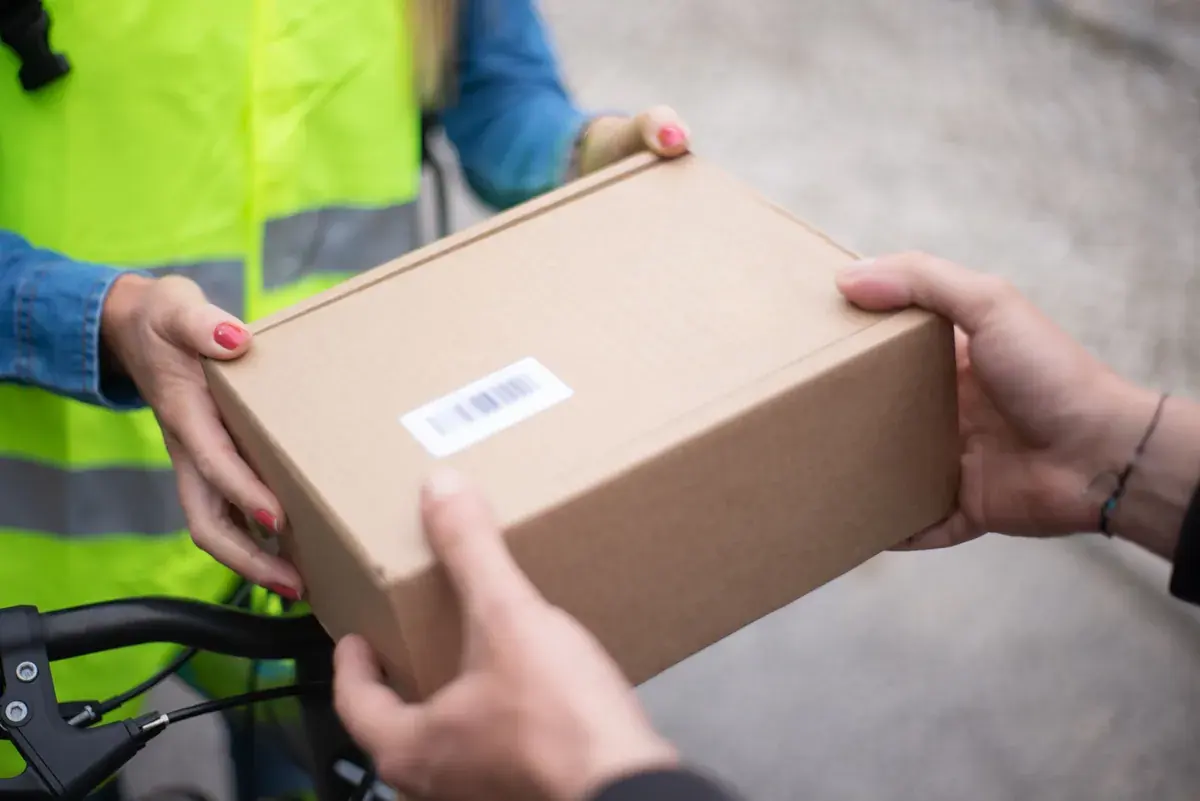
What changes when the foreign customer collects the merchandise in Miami?
A Miami pickup moves the sale onto the statute's presumption that a retail sale to a person physically present was delivered in Florida.[2] From there, the sale is taxable at the general state rate of 6%, and the Department notes that "the county surtax rate applies to a taxable item or service delivered into a county imposing a surtax."[10]
An illustrative scenario, not a client case, shows how this plays out. A Miami distributor sells office equipment to a Colombian company that will use it in its own Bogotá office. If the distributor ships the equipment to an address on a valid forwarding agent certificate, keeps the shipping record and relies on the certificate in good faith, the sale is supported as an export.[6] If the same company sends an employee to collect the equipment at the distributor's warehouse, the sale is presumed delivered in Florida, and the export route the statute describes was never used.[1]
None of this means every pickup by a foreign customer is taxable. It means a pickup removes the export argument based on delivery and leaves the seller looking for a different, documented exemption. For an end user buying for its own use, there is often no such exemption available.
Who owes the tax when exported goods stay in Florida?
When goods sent to a certified address never leave Florida, the statute assigns the tax to the forwarding agent. A forwarding agent "must remit the tax imposed under this chapter on any tangible personal property shipped to the certified address if no tax was collected and the tangible personal property remained in this state or if delivery to the purchaser or purchaser's representative occurs in this state."[5]
That rule protects a seller that did everything right: shipped directly to the designated address, within the certificate's effective dates, in good faith.[6] It does not protect a seller whose own delivery fell outside that channel. If the goods went to an ordinary warehouse address that only looked like a forwarder, or the sale was handed over locally, the remittance duty in the forwarding-agent rule never attaches, and the exposure stays with the seller under the general rule that a sale is taxable unless exempt.[10]
The Department of Revenue also applies use tax on the other side of the transaction: it is "due on the use or consumption of taxable goods or services when sales tax was not paid at the time of purchase."[10] When the equipment ends up in a Florida office, everyone in the chain has a reason to care who paid.

What if the foreign buyer is purchasing for resale?
A foreign buyer purchasing for resale can fall under a separate exemption in section 212.06(5)(c), which does not depend on a forwarding agent at all. Florida does not intend to tax "the sale of tangible personal property to a nonresident dealer who does not hold a Florida sales tax registration," provided the dealer furnishes the seller a statement declaring that the property "will be transported outside this state by the nonresident dealer for resale and for no other purpose."[7]
The statement is specific. It has to identify the dealer by name and address, give a passport or visa number and an arrival-departure card number, and show the dealer's authority to do business in its home state or country; it also has to be signed and carry the sentence beginning "Under penalties of perjury".[7] Then the statute settles who carries the risk: "The burden of proof of subparagraph 1. rests with the seller, who must retain the proper documentation to support the exempt sale."[8]
Returning to the illustration: if the Colombian buyer is a distributor that will resell the equipment at home, a local pickup is not automatically taxable, because the resale exemption is built for exactly that situation. If the buyer will use the equipment in its own office, the resale statement is not available, and signing one anyway would make it a false declaration.
What records does a seller need to support export treatment?
The records that matter are the ones that prove the delivery channel, because the statute and the Department both frame the exemption around how the goods left. The common thread across every route is that the burden sits with the seller and the transaction "is subject to verification by the department."[8]
- For a certified forwarding address: a valid copy of the Florida Certificate of Forwarding Agent Address, or a record of reliance on the Department's list or database, together with proof the seller shipped directly to the designated address.[9]
- For carrier or mail shipments: a shipping record showing delivery to a common carrier for shipment outside Florida, or mailing to a destination outside the state, tied to the specific invoice.[1]
- For sales to a foreign reseller: the signed nonresident dealer statement with every required element, including the passport or visa number and the perjury sentence.[7]
- For every route: invoices that match the shipment or the statement, so the file shows one coherent transaction rather than a foreign address attached to a local handoff.[8]

What commonly goes wrong with export sales in Miami?
- Treating a foreign billing or shipping address as the exemption, when the presumption for a buyer physically present points the other way.[2]
- Accepting a forwarder's name on shipping instructions without checking that the exact address appears on a valid certificate, the Department's list or its database.[6]
- Relying on a certificate outside its effective dates, where the good-faith protection no longer reaches the sale.[6]
- Assuming a forwarder's address carries a zero rate in the Department's database when it uses a suite number or secondary address, which is excluded from the zero-rate reporting.[9]
- Letting the buyer collect the goods and carry them to the forwarder, then coding the sale as an export to a certified address.[9]
- Using a nonresident dealer statement for a buyer that is really an end user, or accepting one that is missing required elements or the perjury sentence.[7]
When does this become a decision for a professional?
It becomes a professional decision as soon as foreign customers are a regular part of the business, because each sale is classified on its own facts and the seller carries the burden of proof for each one.[8] A misclassified export is not a paperwork slip; it is uncollected tax at the 6% state rate plus surtax that the seller can no longer recover from a customer who has already left the country.[10]
The decision usually involves the order flow as much as the tax rule: which customers may collect locally, which forwarders are on the approved list, which buyers qualify as resellers, and how the point-of-sale and accounting systems record the difference. Our Florida sales tax services team reviews how export, pickup and resale sales are classified on the return, and our small business accounting work keeps the supporting documents attached to the right invoices month after month. Trading companies can see how we work with businesses like theirs through our import / export + international trade tax help page.
Sales into other states raise a different question, economic nexus, which is covered in the multi-state economic nexus guide, and the registration side is explained in the Florida sales tax registration guide.
Frequently asked questions
Does an overseas billing address establish that a Florida sale is an exempt export?
No. Florida's export rule is written around delivery: the goods must go to a forwarding agent for export, to a common carrier for shipment outside the state, or by United States mail to an out-of-state destination. A foreign billing address shows who pays, and a retail sale to a person physically present at the time of sale is presumed delivered in Florida regardless of where the invoice is addressed.
What changes if the foreign customer collects the merchandise in Miami?
The sale is presumed delivered in Florida, so the export argument based on delivery no longer applies. It is taxable at the general state rate of 6% plus any county surtax unless another documented exemption fits, such as the nonresident dealer resale statement for an unregistered foreign reseller. A buyer purchasing for its own use usually has no such alternative.
Which delivery records support the merchant's treatment of a sale through a forwarding agent?
The Department of Revenue expects a valid copy of the Florida Certificate of Forwarding Agent Address (DR-14FAA), or reliance on its published list or Address/Jurisdiction Database, plus records showing that the seller itself delivered the goods straight to the agent's designated address. The good-faith protection covers sales made during the effective dates indicated on the certificate.
Is every Miami freight forwarder a certified forwarding agent?
No. Certification attaches to a specific designated address, and the agent must certify that property delivered there is irrevocably committed to export through a continuous and unbroken process and that the address is used exclusively for that export. The Department publishes a List of Approved Forwarding Agents, which is the reference a seller can rely on in good faith.
Who pays the tax if goods shipped to a forwarding agent never leave Florida?
If no tax was collected and the goods remained in Florida, or were delivered to the purchaser or the purchaser's representative in Florida, the forwarding agent must remit the tax. A seller that shipped in good faith to the certified address during the certificate's effective dates is not liable for that tax.
Can a foreign reseller buy goods in Florida without paying sales tax?
It can when it is a nonresident dealer without a Florida sales tax registration and gives the seller a signed statement that the goods will be transported outside Florida for resale and for no other purpose. The statement must include identifying details, such as a passport or visa number, and the perjury declaration. The burden of proof rests with the seller, and the sale is subject to verification by the Department.
Sources
- Section 212.06(5)(a)1., Florida Statutes: property delivered for export · The Florida Legislature, Online Sunshine
- Section 212.06(5)(a)1., Florida Statutes: presumption of in-state delivery · The Florida Legislature, Online Sunshine
- Section 212.06(5)(b)1., Florida Statutes: definition of forwarding agent · The Florida Legislature, Online Sunshine
- Section 212.06(5)(b)3., Florida Statutes: forwarding agent certifications · The Florida Legislature, Online Sunshine
- Section 212.06(5)(b)7., Florida Statutes: forwarding agent tax on goods kept in Florida · The Florida Legislature, Online Sunshine
- Section 212.06(5)(b)11. and 12., Florida Statutes: dealer good-faith reliance and fraud penalties · The Florida Legislature, Online Sunshine
- Section 212.06(5)(c)1., Florida Statutes: sales to nonresident dealers for resale · The Florida Legislature, Online Sunshine
- Section 212.06(5)(c)2., Florida Statutes: seller's burden of proof · The Florida Legislature, Online Sunshine
- Florida Sales and Use Tax: Florida Certificate of Forwarding Agent Address · Florida Department of Revenue
- Florida Sales and Use Tax: rates, use tax and discretionary sales surtax · Florida Department of Revenue
Continue reading

Moving from California or New York to Florida or Texas: State Tax Residency
A move from California or New York to Florida or Texas raises separate questions about domicile, residency under state law, and income the former state can still tax. The facts that establish the move date can matter as much as the date itself.

Is SaaS Taxable in Florida? Sales Tax, Software Bundles and Nexus
Florida generally treats hosted software access differently from a sale of physical goods. A hardware bundle, direct remote sales or a communications service can change the analysis.

Florida Economic Nexus: The $100,000 Remote Seller Threshold
Florida’s economic nexus threshold is more than $100,000 in taxable remote sales in the prior calendar year. Marketplace and direct sales can carry different collection duties.
About the author
Founder & Principal · Enrolled Agent (EA)
Joanny Ibarbia is an Enrolled Agent with unlimited rights to represent taxpayers before the IRS, and a Certifying Acceptance Agent for ITIN applications. He leads the bilingual tax and accounting practice at Top Pro Accounting.
- EA
- CAA
- Harvard Certified
- QuickBooks ProAdvisor
Image credits
- Photo by Tom Van Dyck Pexels
- Photo by Freek Wolsink Pexels
- Photo by Kampus Production Pexels
- Photo by Tima Miroshnichenko Pexels
- Photo by Tima Miroshnichenko Pexels