

Question: When does a business have to file Form 8300 for cash over $10,000?
Form 8300: Report Cash Payments Over $10,000 Within 15 Days
Any trade or business that receives more than $10,000 in cash in one or related transactions must file Form 8300 within 15 days, notify the payer by January 31, and e-file once it files 10 other information returns.
IRS & Compliance14 min read
 By Joanny Ibarbia, EA · CAA
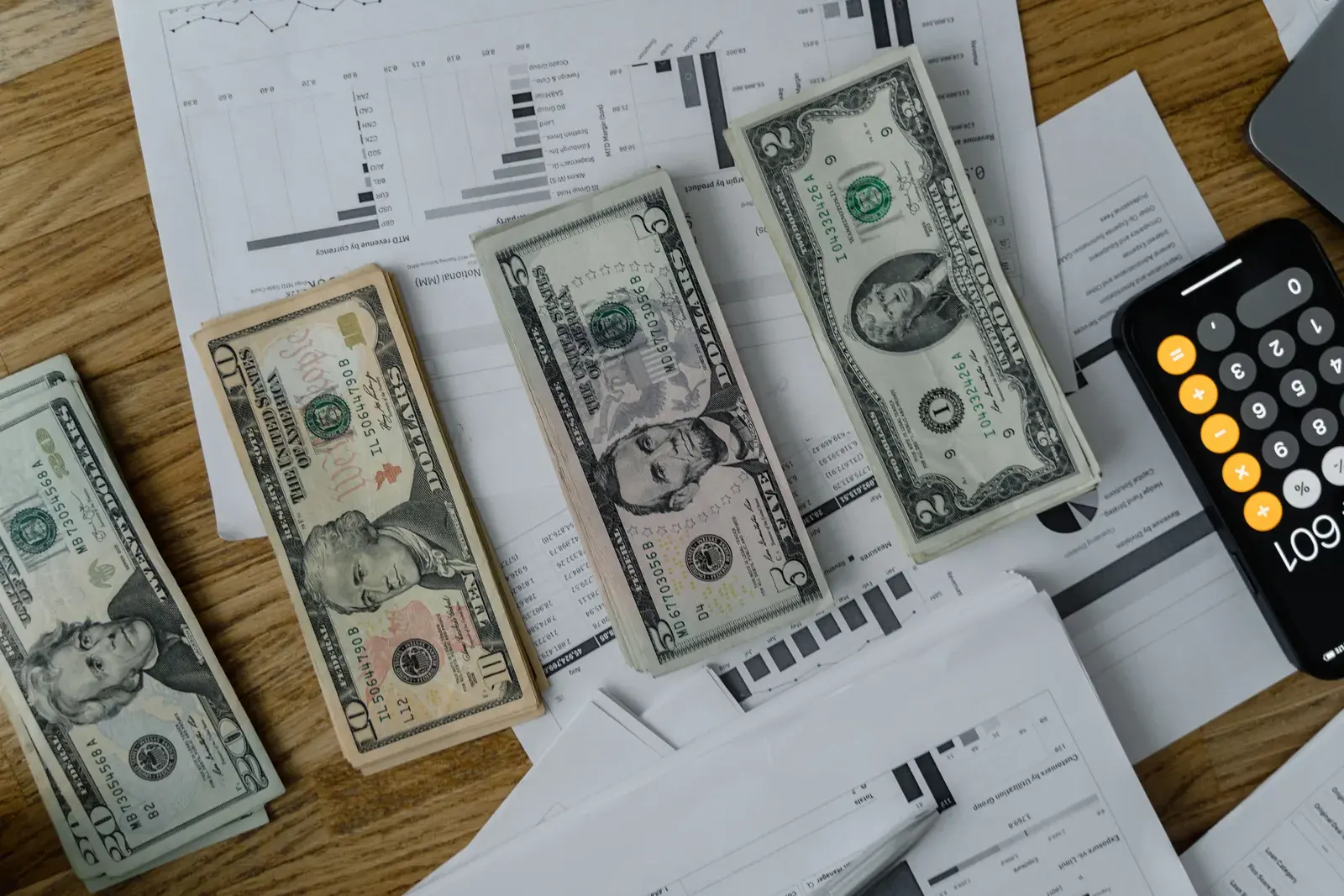
Quick answer
Form 8300 is filed by any person in a trade or business that receives more than $10,000 in cash in a single transaction or in related transactions. It is due within 15 days of the payment, and each time later payments push the running total past the threshold, another Form 8300 is due. You must also give every payer named on the form a written statement by January 31 of the following year. Businesses filing at least 10 other information returns in a calendar year must e-file Form 8300.
Key points
- Any trade or business receiving more than $10,000 in cash in one transaction or in related transactions must file Form 8300
- The deadline is 15 days after the cash arrives, and a fresh Form 8300 is due each time later payments push the total past the threshold
- Cash means US or foreign coins and currency, plus cashier's checks, bank drafts, traveler's checks and money orders of $10,000 or less in defined situations
- Related payments count together within 24 hours and across a 12 month period, so splitting one deal into smaller payments changes nothing
- Effective January 1, 2024, you must e-file Form 8300 if you file at least 10 other information returns during the calendar year
Who has to file Form 8300?
Any person in a trade or business that takes in more than $10,000 in cash from one buyer has to report it. The IRS states the rule plainly: "Generally, any person in a trade or business who receives more than $10,000 in cash in a single transaction or in related transactions must file a Form 8300."[2] The form's reference page applies the same test to cash received "in one transaction or in two or more related transactions"[1], so the duty follows the money rather than the industry.
The word person is broader than everyday usage suggests. The IRS defines it as "an individual, company, corporation, partnership, association, trust or estate"[2]. A sole proprietor selling a boat, a multi-member LLC collecting lease payments, and a tax-exempt organization renting out part of its building all sit inside the same rule. The filings feed the IRS and the Financial Crimes Enforcement Network, which read them to trace money moving outside the banking system.
What counts as cash for Form 8300, and what does not?
Cash is defined more widely than the bills in the register. For Form 8300 purposes the IRS counts "coins and currency of the United States or any foreign country"[3], so a payment in euros is treated exactly like a payment in dollars.
The definition also reaches selected bank instruments. Cashier's checks, bank drafts, traveler's checks and money orders "with a face amount of $10,000 or less"[3] become cash when a customer uses them in a designated reporting transaction, or in any payment where you know the payer is trying to dodge the report. Money orders and cashier's checks under the threshold count again "when used in combination with other forms of cash for a single transaction that exceeds $10,000"[3]. What sits outside the definition matters just as much: a personal check is not on the list, and the IRS example is blunt that "A wire transfer isn't cash."[5] An instrument written for more than the threshold is someone else's report, since banks cover those purchases "by filing currency transaction reports"[3].
What is a designated reporting transaction?
A designated reporting transaction is the retail sale of a durable item priced above the threshold. The IRS definition is "the retail sale of tangible personal property that's generally suited for personal use, expected to last at least one year and has a sales price of more than $10,000"[3], with automobiles, jewelry, mobile homes and furniture named as the classic examples.
Two further categories carry the same label: collectibles, meaning the sale of "a work of art, rug, antique, metal, stamp or coin"[3], and travel or entertainment "if the total price of all items for the same trip or entertainment event is more than $10,000"[3]. The label matters because it converts a cashier's check or money order under the threshold into reportable cash. A showroom that takes part of a watch's price in currency and the balance in a cashier's check has received reportable cash once the combined total crosses $10,000.

When do separate cash payments add up to the threshold?
The threshold is measured per deal, not per payment. A Form 8300 is due when a business receives cash above $10,000 from the same payer or agent "In one lump sum"[4], in "two or more related payments within 24 hours"[4], or "As part of a single transaction or two or more related transactions within a 12 month period"[4].
The IRS marks the shorter window literally: "For example, a 24-hour period is 11 a.m. Tuesday to 11 a.m. Wednesday."[4] The 12 month rule is the one that catches owners off guard. A buyer paying in installments across three seasons has still made one related set of payments if they trace back to a single purchase, lease, or engagement, and breaking a deal into smaller cash payments does not defeat it. Seeing the running total before the deadline runs takes books that flag cash at intake, which is where small business accounting earns its place.
Which cash payments actually trigger a Form 8300?
| Cash the business receives | Form 8300 required? | Why |
|---|---|---|
| Two vehicles bought at once by one couple, $10,200 in cash total | Yes, one form covers it | Whether the dealer sees one transaction or two related ones, a single filing is enough |
| A $7,000 wire transfer plus a $4,000 cashier check | No | A wire transfer is not cash, so the threshold is never reached in cash |
| $9,000 cash for a vehicle, then $1,500 cash for accessories within 12 months | Only if the two purchases are related | An unrelated later purchase does not aggregate into the original sale |
| Cash lease payments from a driver to a taxi company passing $10,000 over a 12-month period | Yes, and again on each later run past the threshold | Related payments aggregate across the 12 month window |
| More than $10,000 of cash rent collected on one lease in a year | Yes, unless the place is your home let out under 15 days | Renting as a trade or business aggregates, but a dwelling you live in and let out fewer than 15 days a year sits outside the rule |
| A contractor paid over $10,000 in cash for a remodel | Yes | Building, renovating, remodeling, landscaping and painting all count |
When is Form 8300 due, and what if more payments follow?
The deadline is short. "A person must file Form 8300 within 15 days after the date the person received the cash."[6] The clock starts on the day of the payment, not the day the bookkeeper reconciles the account.
When a deal is paid in pieces, filing is not a one-time event. Where multiple payments run toward one transaction, the business "should file Form 8300 when the total amount paid exceeds $10,000"[6], and then comes the part most filers miss: "Each time payments aggregate more than $10,000, the person must file another Form 8300."[6] A jeweler collecting a series of cash installments can therefore owe several forms on one sale. Building that trigger into the ledger instead of trusting memory is the fix, and it belongs in the same year-end cycle as your business tax return preparation.
What must you send the payer by January 31?
Filing the form is only half the duty. "Besides filing Form 8300, you also need to provide a written statement to each party whose name you included on the Form 8300 by January 31 of the year following the reportable transaction."[8] Filers who report the cash but never send the statement "are subject to penalties"[8], and the IRS notes that "Penalty amounts are adjusted annually for inflation."[8]
The statement has required contents rather than a required format. It carries "the name, address, contact person and telephone number of your business and the aggregate amount of reportable cash"[8] and must tell the payer the information went to the IRS. The agency wants "a single statement aggregating the value of the prior year's total reportable transactions"[7] per payer, and it discourages mailing a copy of the form itself because of the taxpayer identification numbers printed on it.

Do you have to file Form 8300 electronically?
Yes, once you cross the information return threshold. "Effective January 1, 2024, you must electronically file (e-file) Forms 8300 if you're required to e-file other information returns, such as Forms 1099 series and Forms W-2."[9] The trigger is volume: "You must e-file your Forms 8300 if you're required to file at least 10 information returns of one or more type(s) other than Form 8300 during a calendar year."[9]
The count runs on everything except Form 8300 itself. Five Forms W-2 plus five Forms 1099-INT already reach the line, which is why so many businesses that run payroll are inside the mandate without knowing it. Below the line the pressure comes off: "if you file less than 10 total information returns other than Forms 8300, you're not required to file the information returns electronically and not required to file any Forms 8300 electronically"[9]. Electronic returns move through the Financial Crimes Enforcement Network BSA E-Filing System, and a business that outsources payroll services usually has the volume that forces the switch.
What happens if you file late or on paper when e-filing is required?
Both mistakes land in the same place. If you are required to e-file but mail paper without a hardship waiver or a religious exemption, the return counts as late, and "Forms 8300 that are late are subject to penalty."[10] The IRS is explicit that "Failure to file timely includes a failure to file in the required manner."[10]
A late form still has to be filed, and labeled. "You must file a late Form 8300 in the same way, either electronically or on paper, as a timely filed Form 8300."[10] Late electronic filers put the word LATE in the comments section; late paper filers write it across the top of the first page. Never let an unfiled form sit. If the IRS has already written to you about missing forms, that is the point to bring in IRS representation rather than answering alone.
How long do you have to keep a copy of Form 8300?
Five years. The instruction is short: "Remember, you must keep a copy of Form 8300 for five years."[10] That period runs alongside your normal bookkeeping cycle, so the filed forms need a home you can retrieve them from.
Electronic filers have one extra trap. "When e-filing, be sure to save a copy of the form before you finish submitting the return."[10] The acknowledgement is not a substitute: "Confirmation receipts don't meet the recordkeeping requirement."[10] The workable habit is to save the completed form at submission, write the confirmation number on that copy, and file both with the year's supporting records. A business behind on this is usually behind everywhere else, and catch-up bookkeeping is the step that comes before answering an IRS letter with confidence.

Can you file Form 8300 for a suspicious payment under the threshold?
Yes, and the rules shift when you do. "A person may voluntarily file Form 8300 to report a suspicious transaction below $10,000."[7] Filing under the threshold is optional, and the IRS encourages it whenever a payment pattern looks wrong regardless of size.
The customer notice rule reverses there. "In this situation, the person doesn't let the customer know about the report."[7] The bar is legal, not advisory: "The law prohibits a person from informing a payer that it marked the suspicious transaction box on the Form 8300."[7] The identification problem is handled the same practical way. The form asks for the payer's taxpayer identification number, and "If they refuse to provide it, the person should inform the payer that the IRS may assess a penalty."[7] When the number never arrives, file anyway with an explanation attached and keep proof that you asked.
Which Miami businesses run into Form 8300 most often?
Any operator whose customers pay in currency. Beyond the vehicle and rental examples above, the IRS names bail-bonding agents, colleges and universities, marijuana-related businesses, and contractors, stating that "Contractors must file Form 8300 if they receive cash of more than $10,000 for building, renovating, remodeling, landscaping and painting."[5]
Across South Florida the recurring cases are auto and marine dealers, jewelry and watch showrooms, art galleries, pawn shops, brokerages taking cash deposits, and travel sellers packaging trips above the threshold. Rental operators sit squarely inside the rule, which is why real estate and property management clients meet it around lease payments and closing deposits. Tax-exempt organizations are covered too: a charitable cash contribution is not reportable, but noncharitable cash income such as rent is. When non-resident buyers in those deals need a US taxpayer identification number, our ITIN application guide for Miami filers covers that step.
Frequently asked questions
What counts as cash for Form 8300?
Coins and currency of the United States or any foreign country, plus cashier's checks, bank drafts, traveler's checks and money orders with a face amount of $10,000 or less when received in a designated reporting transaction or in a payment you know is meant to avoid the report. Money orders and cashier's checks also count when combined with currency to settle one transaction above the threshold. A wire transfer is not cash, and neither is a personal check.
How many days do you have to file Form 8300?
Fifteen. The IRS requires the form within 15 days after the date the cash was received, counted from the payment date rather than from year end. If later payments push the running total past $10,000 again, another Form 8300 is due each time.
Do two smaller cash payments trigger Form 8300?
They can. Payments count together when they land in two or more related payments within 24 hours, or when they belong to one transaction, or to related transactions, inside a 12 month window. In the IRS example, a dealer who takes a total of $10,200 in cash from one couple buying two vehicles at once files a single Form 8300.
Do you have to tell the customer that you filed Form 8300?
In most cases yes. Every party named on the form gets a written statement by January 31 of the year following the reportable transaction, carrying your business name, address, contact person and telephone number and the aggregate reportable cash, and stating that the information went to the IRS. The exception is a voluntary filing flagging a suspicious transaction, where the law prohibits telling the payer.
Does Form 8300 apply to cryptocurrency payments?
Not while the transitional relief holds. The IRS definition of cash for Form 8300 covers coins and currency plus the listed cash equivalents, and digital assets are not on that list in the guidance the agency maintains for the form. Congress extended the underlying cash reporting statute to digital assets, but the IRS said in Announcement 2024-4 that businesses need not treat them as cash when testing the threshold until Treasury and the IRS publish regulations, which have not appeared. The relief ends when they do.
What if the payer refuses to give a taxpayer identification number?
File anyway. Form 8300 asks for the payer's taxpayer identification number, and if the payer refuses you should say the IRS may assess a penalty. If the number never arrives, file the form with an explanation of why it is missing, and keep records showing that you asked so you can hand them to the IRS on request.
Sources
- About Form 8300, Report of Cash Payments Over $10,000 Received In a Trade or Business · Internal Revenue Service
- Understand how to report large cash transactions · Internal Revenue Service
- Understand how to report large cash transactions · Internal Revenue Service
- Understand how to report large cash transactions · Internal Revenue Service
- Understand how to report large cash transactions · Internal Revenue Service
- Understand how to report large cash transactions · Internal Revenue Service
- Understand how to report large cash transactions · Internal Revenue Service
- Form 8300 and reporting cash payments of over $10,000 · Internal Revenue Service
- Form 8300 and reporting cash payments of over $10,000 · Internal Revenue Service
- Form 8300 and reporting cash payments of over $10,000 · Internal Revenue Service
Continue reading

ERC Disallowance: Two Years to Appeal Letter 105-C, Plus Form 907
The IRS disallows an Employee Retention Credit on Letter 105-C or 106-C, and you get two years to resolve the claim or file suit. Since April 27, 2026, a Form 907 request through the Document Upload Tool can extend that window.

Letter 147C: How to Get IRS Written Verification of Your EIN
A bank, payroll provider, or withholding agent commonly asks for written IRS verification of your EIN before opening the account or releasing a payment. Here is how to request Letter 147C, why the lost CP 575 is not your only path, and what a foreign owner should ask for.

Form 990 vs 990-EZ vs 990-N: $50,000 and $200,000 Nonprofit Thresholds
Most tax-exempt organizations file annually. Which return depends on gross receipts and total assets: $50,000 for the 990-N e-Postcard, $200,000 and $500,000 for 990-EZ, otherwise the full Form 990.
About the author
Founder & Principal · Enrolled Agent (EA)
Joanny Ibarbia is an Enrolled Agent with unlimited rights to represent taxpayers before the IRS, and a Certifying Acceptance Agent for ITIN applications. He leads the bilingual tax and accounting practice at Top Pro Accounting.
- EA
- CAA
- Harvard Certified
- QuickBooks ProAdvisor
Image credits
- Photo by Tima Miroshnichenko Pexels
- Photo by www.kaboompics.com Pexels
- Photo by Mark Stebnicki Pexels
- Photo by cottonbro studio Pexels